





Most homes do not need one fixed generator size. They need a clear outage plan.
A 3,000-7,500 watt generator can often cover essential emergency power. A 7,500-12,000 watt unit may support a larger home backup power setup with managed loads.
A standby whole-home generator may need 12,000 to 25,000 watts—or even higher—particularly if you plan to power central AC, a well pump, electric heating, or other 240V loads. Choosing the correct generator size is straightforward: list what must remain powered, total the running wattage, account for startup surge, and then confirm fuel availability or battery capacity for the expected outage duration.
Start With the Outage You Actually Want to Handle
Do not size a generator by home size first. A 2,000-square-foot home with gas heat may need less backup power than a smaller home with electric heat, a well pump, and central AC.
A better starting point is the type of power outage you want to survive.
Essential Backup
This plan covers food, lighting, communication, and a few critical devices. Think refrigerator, freezer, router, phone charging, LED lights, and maybe a furnace blower.
A rough planning range is 3,000-5,000 running watts. This can work well for short outages when comfort loads can wait.
Functional Home Backup
This plan keeps the house more usable. It may include a sump pump, more lights, a microwave used briefly, a TV, or extra AC outlet access.
A rough planning range is 5,000-7,500 running watts. The key is load rotation. You use high-wattage devices one at a time.
Managed Large-Load Backup
This plan adds larger loads, such as a well pump, small air conditioner, or selected 240V equipment.
A rough planning range is 7,500-12,000 watts. At this level, voltage, starting watts, transfer equipment, and real-time load behavior matter much more.
Whole-Home Backup
This plan aims to power most or all of the home.
A whole house generator often falls in the 12,000-25,000+ watt range. Homes with central AC, electric heat, electric water heating, or multiple pumps may need professional sizing.
Use Three Budgets: Watts, Surge, and Runtime
A generator has to pass three separate tests. Many people only check the first one.
The Watts Budget
Watts tell you how much power output the generator can provide at one moment. The U.S. Energy Information Administration explains that watts measure power, while watt hours measure electricity used over time.
For generator sizing, add the running watts of everything you want to use at the same time.
Running load = all devices running together
Use appliance labels, manuals, or a plug-in watt meter when possible. Avoid guessing from generic charts unless you are only making an early estimate.
The Surge Budget
Some appliances need extra power to start. Refrigerators, freezers, pumps, and air conditioner compressors can draw more power for a short moment before settling into normal operation.
Use this formula:
Minimum generator size = running load + largest extra startup surge
The “extra startup surge” is the gap between starting watts and running watts. You usually do not need to add every surge together unless several motors may start at once.
The Runtime Budget
Runtime is different from size. A generator may have enough AC power to run a load but not enough fuel or battery capacity to keep it running through extended outages.
For a portable power station or solar generator, use this estimate:
Runtime = usable watt hours ÷ average watts
A 600-watt average load needs about 6,000 usable watt hours for 10 hours before real-world losses and reserve settings. This is why battery capacity, battery packs, and expansion batteries matter for longer backup plans.
Build Your Load List Like a Priority List
A useful home backup power plan has priorities. It should not treat every appliance the same.
First Priority: Protection Loads
These protect food, safety, health, or the home itself.
Common examples include:
- Refrigerator
- Freezer
- Medical device
- Sump pump
- Well pump
- Furnace blower
- Router
- Basic LED lighting
These loads should get power first. If your generator cannot support them, it is not solving the main problem.
Second Priority: Comfort Loads
These make an outage easier but can usually rotate.
Examples include a microwave, coffee maker, TV, fan, laptop, small cooking appliance, or window air conditioner. These loads should not all run at once unless your generator is sized for that.
Third Priority: Delay Loads
Some loads can wait until grid power returns.
Electric dryers, EV charging, electric ovens, large tools, and nonessential high-wattage devices can quickly force you into a larger and more expensive system. Leaving them out may let a smaller power solution work better.
The Original Sizing Shortcut: Pick Your Hardest Load
Most homes have one load that decides the generator class. Find that load first.
If Refrigeration Is the Hardest Load
Your plan is likely an essential backup setup. A refrigerator and freezer need startup power, but they do not run at full load all day.
This is where a mid-size generator or a larger portable power station can make sense. Keep the baseline low, and your watt hours go further.
If Water Is the Hardest Load
A sump pump or well pump changes the math. Pumps can have high startup demand, and some require 240V power.
In this case, size around the pump first. Then add lights, router, refrigeration, and small devices after that. A generator that runs your TV but cannot start the pump is the wrong size.
If Cooling Is the Hardest Load
An air conditioner often pushes a home into a larger generator class. A small window unit may be manageable. Central air usually needs more careful planning.
Check the equipment label and ask an electrician or HVAC technician about startup load, voltage, and soft-start options. Do not size central AC by square footage alone.
If “Everything” Is the Hardest Load
That is a whole-home backup project. You will need a generator, transfer switch, load calculation, and installation plan that match your electrical panel.
This is where a whole house generator may be the right choice. It is also where professional sizing is worth the cost.
Portable Generator, Portable Power Station, or Solar Generator?
The best generator size also depends on the type of system you choose.
Portable Fuel Generator
A portable fuel generator can provide strong power output for the price. It works well for short-term emergency power when you can place it safely outdoors, store fuel, and connect loads correctly.
Its limits are noise, exhaust, refueling, maintenance, and weather exposure.
Portable Power Station
A portable power station is better for quiet backup of selected loads. It can provide AC power through built-in AC outlet ports and can run indoors because it has no engine exhaust.
Its limit is stored energy. You need enough battery capacity for your average load and outage length.
Solar Generator
A solar generator combines a portable power station with solar panels. Solar charge can extend runtime, but solar input depends on sunlight, panel size, shade, weather, and charging limits.
This option works best when you keep loads modest and plan around watt hours, not just peak watts.

Where ABOK Fits in a Backup Plan
If you are comparing battery-based backup, match the product specs to your load list.
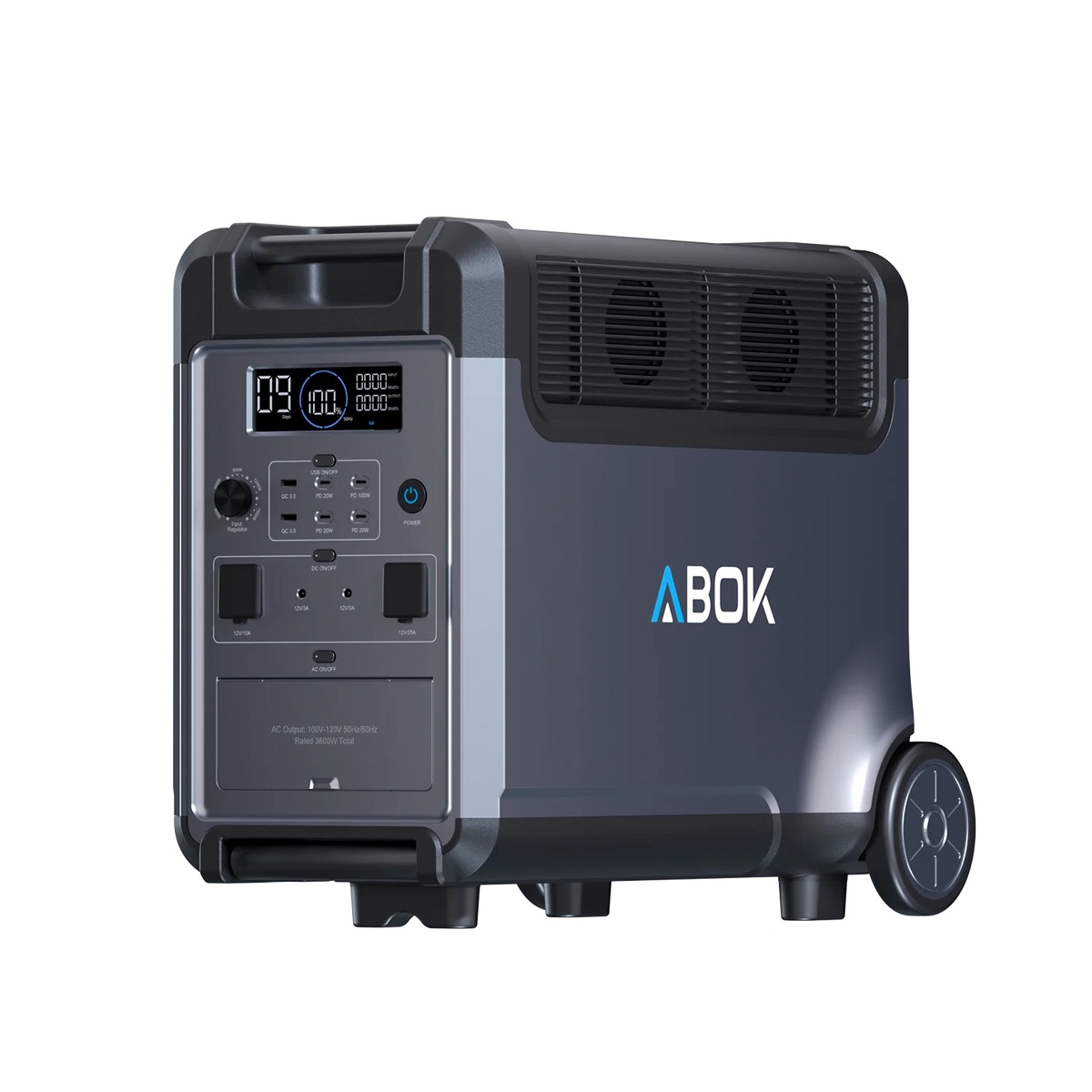
The ABOK Ark3600 is listed with 3,600W AC output, 3,840Wh capacity, expandable capacity up to 11,520Wh, 2,000W solar input, and a LiFePO4 battery. It fits selected home backup power, RV power, outdoor work, and camping trips where the load plan is controlled.

The ABOK Ark7200 is listed with 9,792Wh capacity, 7,200W dual-phase AC output, expansion battery support up to 29,376Wh, and up to 2,500W PV input through its high voltage solar input path. It gives more room for larger backup plans, but it still needs to match your real loads and connection method.

Safety Comes Before Convenience
Fuel-burning generators create carbon monoxide. The U.S. Consumer Product Safety Commission advises that portable generators be operated outdoors only, positioned at least 20 feet from the house, with the exhaust aimed away from doors, windows, and air vents.
How you hook it up is just as important. OSHA generator guidance cautions not to tie a portable generator straight into a building’s wiring unless a correctly installed transfer switch is in place.Never backfeed through a wall outlet. For residential electrical circuits, rely on a transfer switch or an approved interlock, installed by a licensed electrician.
FAQ
Will a 5,000-watt generator run a house?
A 5,000-watt generator can often run essential loads, such as refrigeration, basic lights, router, device charging, and possibly a furnace blower or small pump. It usually will not run a full home with central AC, electric heat, electric cooking, and other large appliances at the same time.
Is 7,500 watts enough for home backup power?
A 7,500-watt generator can be enough for a strong partial-home backup plan. It may cover essentials plus selected comfort loads if you rotate usage. It may not be enough for central air, a large well pump, electric water heating, or multiple heavy loads running together.
Can a solar generator run a house?
A solar generator can run selected household loads if its AC output, battery capacity, solar input, and connection method fit the plan. It is better to think in terms of essential circuits and runtime instead of expecting one battery system to power every appliance indefinitely.
How much battery capacity do I need for extended outages?
Multiply your average load by the number of hours you want backup. A 500-watt average load for 12 hours needs about 6,000 watt hours before losses and reserve settings. For extended outages, lower the baseline load, add battery packs if supported, and use solar charge when conditions allow.
Should I buy the biggest generator I can afford?
Not always. Bigger systems cost more, take more space, and may use more fuel or take longer to recharge. The better choice is a generator sized for your real loads, the largest startup surge, and the outage duration you are planning for.
Bottom Line
To decide how big of a generator to run a house, start with the outage plan. Essentials often fit in the 3,000-7,500 watt range. Larger managed backup may need 7,500-12,000 watts. Whole-home backup can require 12,000-25,000+ watts, especially with an air conditioner, pumps, electric heat, or 240V circuits.
Add running watts, include the largest startup surge, and plan runtime through fuel or battery capacity. That gives you a system sized for real life, not a generic chart.
Share:
How Many Watts to Run a House? | ABOK
What Is an Inverter Generator?