





How Many Watts to Run a House? A Practical Sizing Guide
How many watts to run a house depends on your backup goal. Most homes need about 3,000 to 7,500 watts for essential appliances during an outage. Broader backup may require 7,500 to 12,000 watts. Whole-home coverage may need 12,000 to 25,000 watts or more.
Your home wattage requirements depend on which appliances run together. Starting watts and voltage also matter. For battery backup, you must calculate the required watt-hours. The right answer comes from a load worksheet, not your home’s size or average monthly electric bill.
Average Energy Consumption Is Not Peak Power Demand
The U.S. Energy Information Administration reported that residential customers used an average of 865 kilowatt-hours (kWh) per month in 2024. Spread evenly across a month, that equals an average continuous load of roughly 1,185 watts.
However, people do not use electricity evenly throughout the day. HVAC systems, pumps, water heaters, cooking appliances, and dryers can create much higher short-term demand. A 1,200-watt generator might match the monthly average but still overload when a motor or compressor starts.
Use EIA residential consumption data to understand long-term energy consumption, not to select a backup power system. Base the watts needed for home backup on the appliances that may operate at the same time.
How Many Watts to Run a House During an Outage?
The following ranges are useful for early planning. They do not replace appliance labels, product manuals, or a professional electrical load calculation.
1,500 to 3,000 Watts: Carefully Selected Basics
This range may support lighting, communications, device charging, and limited refrigeration. It leaves little room for high-starting motors or heat-producing appliances.
This range works best when you manage loads carefully. Use it for selected devices rather than whole-home circuits.
3,000 to 5,000 Watts: Managed Essential Loads
This range can support an essential-load plan in many homes. Refrigeration, communications, lighting, and selected heating controls may fit if their verified wattage stays within the system’s limits.
A furnace blower, refrigerator compressor, sump pump, or well pump may use much of the available surge capacity. Check the starting watts of every motor-driven appliance.
5,000 to 7,500 Watts: Broader Essential Backup
A system in this range can provide more continuous power for essential appliances. It may also run selected pumps or heating-system components if the voltage and surge ratings are suitable.
Central air conditioning and several large electric appliances can still exceed the available power output. You may need to manage when each appliance runs.
7,500 to 12,000 Watts: Essentials Plus Larger Loads
This range may support essential circuits plus one or more larger loads. A mixed-fuel home with gas heating, hot water, or cooking may fit more easily than an all-electric home.
Ten thousand watts does not guarantee full whole-home operation. Running central AC, an electric water heater, a range, and a dryer at once may exceed the source rating.
12,000 to 25,000 Watts or More: Potential Whole-Home Coverage
This range may support whole-home backup, but every property has different power needs. Large HVAC systems, electric heat, EV charging, and several 240V appliances can increase demand.
Use a professional load calculation for whole house generator sizing. Include the largest startup load, fuel type, voltage, and connection equipment.
How to Calculate Generator Size for House Backup
Start with the appliances that must remain available during an outage. Do not include every appliance connected to the electrical panel unless you need full whole-home coverage.
1. Define Your Backup Scope
Choose one of three levels:
- Critical loads: Medical equipment, refrigeration, communications, limited lighting, and necessary pumps or heating controls.
- Essential living: Critical loads plus selected cooking, comfort, and work equipment.
- Whole home: Most circuits remain available with little manual load management.
A smaller backup source may be enough. Leave out electric heating, central air conditioning, EV charging, and other heavy loads when possible.
2. Find the Essential Appliance Wattage
Check each appliance’s nameplate, owner’s manual, or official product data. A plug-in power meter can measure compatible appliances during normal use.
Do not use a generic wattage chart as your final source. Appliances in the same category can have very different power needs.
If a label lists volts and amps but not watts, use:
Watts = Volts × Amps
For example, a 120V device drawing 5 amps has a power requirement of about 600 watts. Nameplate values may show maximum input rather than typical use. Measured data can provide a better energy estimate.
A Department of Energy load-planning guide recommends listing each device and recording its wattage. Multiply the watts by its daily operating time to estimate energy use.
3. Add the Running Watts
Running watts are the continuous power an appliance needs after startup. Add the running watts of everything that may operate at the same time.
Required continuous output ≥ total running watts
Operating time does not change the required power output. A microwave used for ten minutes still draws its full running wattage during those ten minutes. The shorter period only reduces total energy consumption.
4. Account for Starting Watts and Surge Watts
Compressors, pumps, and other motors may need extra power for a few seconds during startup. Product manuals may describe this as starting watts, surge watts, or additional starting watts.
Check how the product defines each number:
- Total starting watts means the appliance’s full demand during startup.
- Additional starting watts means the extra demand above its normal running load.
Use this basic calculation:
Minimum surge requirement = total running watts + largest additional startup load
Suppose your appliances use 3,200 running watts. The largest additional startup load is 1,800 watts. Your backup source must provide at least 5,000 surge watts. Its continuous rating must also exceed the 3,200-watt running total.
Use this method when only one large motor starts at a time. If two motors may start together, include both in the surge calculation.
The Generac sizing worksheet uses the same running-load-plus-largest-starting-load method for an initial estimate.
5. Verify Voltage and Outlet Limits
A high wattage rating does not mean the system will work with every appliance. Many central air conditioners, well pumps, electric dryers, ranges, and water heaters require 240V power. A 120V-only generator or inverter cannot operate a 240V appliance.
Each outlet has its own limit. A 120V, 20-amp outlet can provide up to 2,400 watts. This limit stays the same even if the generator has a higher total rating.
Generac’s power-limit guide explains how voltage, amperage, and individual outlets affect usable output.
Check these details before choosing a system:
- Continuous power output
- Starting or surge output
- Surge duration
- Support for 120V or 120/240V appliances
- Output available from each outlet
- Plug and transfer-equipment requirements
- Output rating for the intended fuel
- Safe use with sensitive electronics
How Battery Backup Capacity Affects Runtime
Watts determine what a system can operate at one time. Watt-hours determine how long a battery can supply that power.
A portable power station for home backup must pass two tests:
- Its inverter must provide enough running and surge power.
- Its battery capacity must provide the required runtime.
Use this battery runtime calculation:
Estimated runtime = usable battery energy in Wh ÷ average load in W
For example, divide 4,000 watt-hours by an 800-watt load. The estimated runtime is five hours. Actual runtime may be lower because of inverter losses, temperature, standby use, and changing appliance loads.
When a battery is powering a home, calculate each appliance separately:
Energy needed in Wh = watts × operating hours
Add the watt-hours for all loads. A router may stay on all day, while a refrigerator, pump, or air conditioner cycles on and off. Use realistic operating times. Do not assume every appliance runs all day.
Some products list total battery capacity instead of usable capacity. System limits and power loss reduce the energy available to your devices.
What Determines Whole House Power Requirements?
Heating and Cooling
Electric resistance heat, auxiliary heat strips, heat pumps, and central air conditioning can dominate peak demand. Gas and oil furnaces still use electricity for their controls and blowers. These components may also need extra startup power.
The equipment’s nameplate matters more than a generic HVAC estimate. System size, motor design, climate, and energy efficiency all affect consumption.
Water Heating, Cooking, and Laundry
Electric water heaters, ranges, ovens, dryers, and high-power countertop appliances can sharply increase demand. Running them at different times can reduce the required backup wattage.
For example, turn off an electric water heater while using the range. This keeps two heavy loads from running together.
Pumps and Power Tools
Well pumps, sump pumps, sewage pumps, and pool equipment may have high startup demand. Use their nameplate and official product data instead of estimating from horsepower alone.
Apply the same rule when powering tools during an outage. Include compressors, saws, and workshop equipment in your running and startup calculations.
Fuel Mix
Power needs can vary widely between similar homes. Homes with gas heating, hot water, and cooking usually have fewer high-power electrical loads than all-electric homes.
Fuel mix often matters more than square footage. A small all-electric property may require more backup power than a larger mixed-fuel house.
Load Management
A backup system does not have to power every appliance at once. During an outage, run large appliances one at a time. Avoid using the water heater, multiple compressors, and EV charger together.
Load management reduces peak demand. It does not always reduce the watt-hours needed to complete the same tasks over a longer period.
Portable Power Stations, Solar Generators, and Fuel Generators
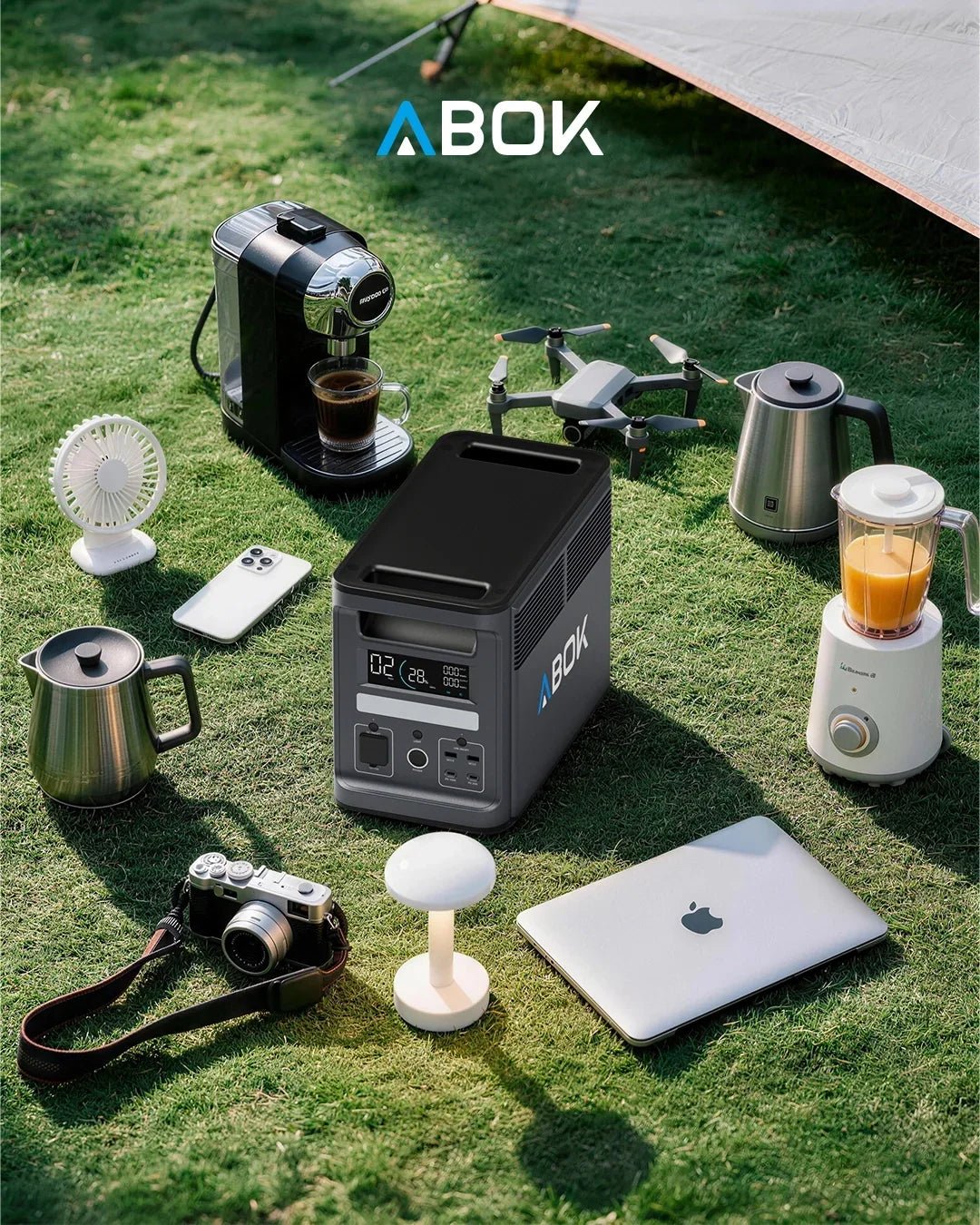
A portable power station stores electricity in a battery and supplies it through an inverter. It can power essential devices during an outage. Make sure its output, surge rating, voltage, and battery capacity meet your needs.
Solar generators combine a power station with one or more solar panels. Solar panels can extend battery runtime in good sunlight. However, they may not produce their rated power all day.
Daily solar charging depends on the weather, season, panel angle, shade, and the system’s solar input limit.
Fuel-powered portable generators can run as long as they have fuel and proper maintenance. They also produce exhaust, noise, and carbon monoxide. Plan their placement and fuel storage carefully.
The right choice depends on more than maximum wattage:
- Choose enough continuous and surge power for verified loads.
- Match battery capacity or fuel supply to the required runtime.
- Check whether the system supports 120V or 240V appliances.
- Check recharge time and available solar input.
- Check the product manual before powering sensitive electronics.
- Decide whether you need direct appliance connections or household circuits.
A properly sized system gives you peace of mind. You know what it can power before an outage.
For a closer look at power-station output classes, see ABOK’s power station buying guide. You can then compare your worksheet with the specifications in the ABOK portable power station collection.
Connect and Operate Backup Power Safely
Never power household wiring by plugging a generator into a wall outlet. This can cause backfeeding and send power into utility lines. It can endanger workers and bypass household protection.
The Electrical Safety Foundation International recommends using a transfer switch to separate utility and generator power. A qualified electrician should install the switch or other approved connection equipment.
Fuel-powered portable generators must operate outdoors. The U.S. Consumer Product Safety Commission says to place generators at least 20 feet from your home. Point the exhaust away from windows, doors, and vents.
Never operate a fuel generator inside a home, basement, shed, or garage. This rule still applies when the garage door is open. Keep carbon monoxide alarms working and follow the product manual when operating or refueling the generator.
Do not connect a battery power station to home wiring with an improvised cord or adapter. Use the connection equipment listed in the product manual and follow local electrical codes.
Frequently Asked Questions
How Many Watts Does an Average House Use at One Time?
In 2024, the national average was 865 kWh per month. This equals an average of about 1,185 watts over time. Real household demand rises and falls throughout the day, so this average should not determine generator or inverter size.
Instead, calculate the running watts of appliances used together. Then include their startup demand.
Can a Solar Generator Run a House?
A solar generator can power selected household devices. Its output, surge rating, and battery capacity must meet their power needs.
Larger systems may support more circuits. However, the term “solar generator” does not mean the system can power an entire home.
Check how many watt-hours the battery stores. Then estimate how much energy the solar panels can produce each day.
How Much Battery Capacity Do You Need Overnight?
Multiply each appliance’s wattage by the hours it will run. Then add the results. For cycling loads, estimate the actual operating time instead of using full wattage for the entire night.
Battery backup capacity should account for usable capacity and power loss. Output must also be high enough to start and run every appliance used at the same time.
Size the Loads Before Choosing the System
The most accurate answer to how many watts to run a house comes from a verified load worksheet. Many essential-load plans need 3,000 to 7,500 watts. Whole-home systems may require 12,000 to 25,000 watts or more.
Add the running loads that operate together. Include the largest startup demand. Then check voltage and outlet limits.
For battery backup, calculate watt-hours separately from watts.
This method helps you choose the right generator size for house backup. It uses actual power needs instead of square footage or advertised peak output.
Share:
What Size Generator Do I Need? A Clear Sizing Guide
What Is mAh? A Simple Guide to Battery Capacity