





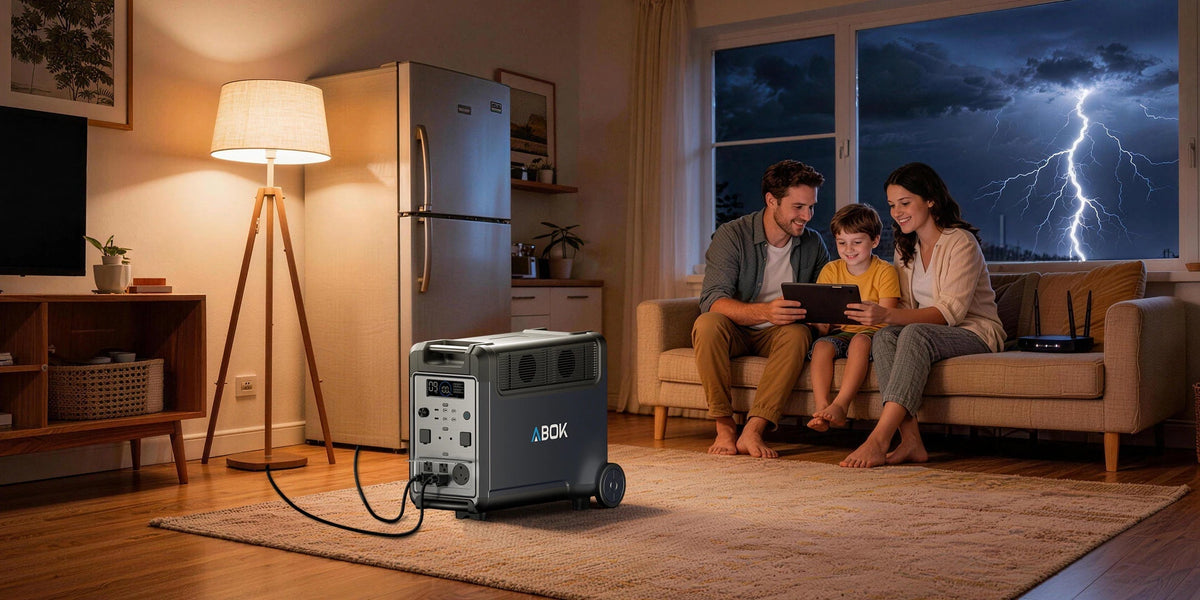
How much is a home generator? A small portable gas generator may cost about $500-$2,500 for the unit, while many installed home standby generators land around $8,000-$16,000. A solar generator or portable power station for home backup usually sits between those extremes, depending on battery pack size, inverter output, solar input, and accessories. The smarter way to budget is to price the outage you want to survive: a few essential appliances, refrigerator backup power overnight, or whole home backup power during extended outages.

How Much Does a Home Generator Cost by Backup Level?
Home generator cost is easier to understand when you break it into three backup levels: plug-in essentials, selected home circuits, and automatic whole-house coverage.
| Backup level | Typical power solution | Cost range to expect |
|---|---|---|
| Plug-in essentials | Portable power station, solar generator, or small portable gas generator | Hundreds to a few thousand dollars |
| Selected circuits | Larger portable generator, inverter generator, expandable battery backup generator, transfer switch | Often several thousand dollars |
| Automatic home backup | Home standby generator with automatic transfer switch and fuel connection | Commonly $8,000-$16,000 installed |
| Whole-house coverage | Larger standby system or high-capacity battery setup | Often low five figures or more |

HomeGuide lists portable generator cost at about $500-$2,500 for the unit, with higher totals when the generator is connected to a house. Generac says many installed standby generator projects range from $8,000-$16,000, including equipment, materials, and installation.
So the short answer is simple: a home generator can be affordable if you only need backup power for home essentials, but whole house generator cost rises quickly when you want automatic operation, large appliances, and professional installation.
What Are You Actually Paying For?
A house generator is not one purchase. It is a stack of decisions.
You are paying for the machine or battery system first. Then you may pay for wiring, a transfer switch, fuel work, permits, solar panels, expansion batteries, or a weather-safe installation location. That is why two homeowners can search “how much does a home generator cost” and get very different quotes.
The biggest cost drivers are:
- Output: How many watts the system can deliver at one time.
- Stored energy or fuel supply: How long it can keep devices running.
- Starting watts: Whether it can start motors such as a sump pump, refrigerator, or well pump.
- Connection method: Extension cords, manual transfer switch, interlock, or automatic transfer switch.
- Voltage needs: 120V essentials only, or 120/240V for larger home loads.
- Installation complexity: Panel location, fuel line distance, permits, and labor rates.
Generator installation cost is often what surprises buyers. A portable generator used with cords may need little setup. A standby unit usually needs professional electrical and fuel work. HomeGuide estimates transfer switch installation cost at about $400-$2,500, depending on the home and equipment.

Portable Generator, Solar Generator, or Standby Generator?
Each option has a different kind of cost effectiveness.
A portable gas generator is usually the lowest upfront path to emergency home power. It can generate power as long as you have fuel, but it brings noise, maintenance, outdoor-only operation, refueling, and carbon monoxide safety requirements.
A solar generator for home backup is different. It stores energy in a battery and powers devices through an inverter. It does not generate exhaust while operating, can be used indoors when manufacturer instructions allow, and can recharge from grid power, solar panels, or sometimes a vehicle input. The trade-off is runtime: once the stored energy is used, you need a recharge source.
A home standby generator is the convenience choice. Home standby generators start automatically when grid power fails, then send power through a transfer switch. That peace of mind costs more because the system is permanent, connected to fuel, wired into the home, and sized for heavier loads.
| Choose this | If your main concern is |
|---|---|
| Portable gas generator | Lowest upfront cost and basic outage coverage |
| Inverter generator | Portable backup with quieter operation and support for sensitive electronics, depending on specs |
| Portable power station | Quiet stored energy for phones, Wi-Fi, lights, CPAP, laptops, and small appliances |
| Solar generator | Battery backup plus solar charging for longer outages or camping trips |
| Standby generator | Automatic backup without rolling out equipment during a storm |
How Much Solar Generator Capacity Do You Need?
Solar generator cost depends heavily on capacity and output. Capacity tells you how much stored energy the battery can hold. Output tells you how much power the inverter can deliver at once.
The U.S. Energy Information Administration explains that watts measure power at a moment, while watt-hours measure electricity used over time. That difference matters. Your electric bill may show monthly energy use, but home generator sizing depends on what must run at the same time.
Use this simple runtime formula:
Estimated runtime = usable battery capacity in Wh / average device load in W

For example, a 3,840Wh battery running a 400W average load has a simple math estimate of 9.6 hours before real-world losses. Actual runtime will be lower or higher depending on appliance cycling, inverter efficiency, standby draw, temperature, and how many devices run together.
For current ABOK examples, the Ark3600 is listed with 3,840Wh capacity, 3,600W output, expansion up to 11,520Wh, and 2,000W max solar input. The Ark7200 is listed with 9,792Wh capacity, 7,200W dual-phase AC output, expansion support, and up to 2,500W PV input. Always confirm the current configuration and accessories on the official product page before comparing prices.
A More Useful Way to Build Your Budget
Instead of asking for one average home backup generator cost, build your budget around the devices you care about most.
| Outage priority | What to include | Budget direction |
|---|---|---|
| Food and communication | Refrigerator, freezer, Wi-Fi router, phone charging | Small to mid-size backup |
| Health and safety | CPAP, medical charger, lights, fan, communication devices | Quiet battery backup or managed portable generator |
| Basement protection | Sump pump, refrigerator, lights, router | Higher output and surge capacity |
| Work-from-home continuity | Router, laptop, monitor, lights, sensitive electronics | Portable power station or inverter generator |
| Comfort during extended outages | Furnace blower, larger fridge/freezer load, microwave, selected outlets | Larger generator or expandable power station |
| Near-normal home use | Central AC, well pump, kitchen circuits, multiple rooms | Standby or whole-house system |
This approach prevents overspending. Many households do not need a whole-house system to protect food, stay connected, and keep essential appliances running. Others do need larger power solutions, especially if outages are frequent, long, or medically sensitive.
Safety Can Change the Final Price
Fuel-burning generators must be used outdoors. The U.S. Consumer Product Safety Commission warns that portable generators should never run inside homes, garages, basements, sheds, or near openings. The CDC says gasoline-powered engines should not be used inside the home or within 20 feet of any window, door, or vent.
That safety requirement can affect cost. You may need longer outdoor-rated cords, a weather-safe location, carbon monoxide alarms, an inlet box, or a transfer switch. If a generator connects to home wiring, do not plug it into a wall outlet. Use properly rated transfer equipment installed by a qualified electrician.
Battery systems avoid engine exhaust, but they still have limits. Keep the unit dry, follow charging instructions, respect the rated output, and confirm whether the battery pack and inverter can handle starting loads.
FAQ
Is a $500 generator enough for a home?
A $500 generator may be enough for a few plug-in essentials, but it is not a whole-home backup plan. It may support lights, charging, a router, or one small appliance depending on wattage. For refrigerators, pumps, and multiple loads, check both running watts and starting watts before buying.
Is a solar generator worth it for home backup?
A solar generator can be worth it if you value quiet operation, stored energy, no engine exhaust, and flexible use for home outages, RV power, and camping trips. It is less ideal if you expect to run central AC, electric heat, or multiple large appliances for days without a realistic recharge plan.
Will a home generator reduce my electric bill?
Usually no. A generator is mainly for power outage backup, not lowering the electric bill. Solar panels and home batteries may affect how much grid power you use, but a portable or standby fuel generator normally adds fuel and maintenance costs.
What size generator do I need for refrigerator backup power?
Check the refrigerator label or manual for running watts and starting watts. The American Red Cross recommends adding up the appliances and lights you want to use, then choosing extra capacity because some devices need more power when starting. The CDC also notes that a closed refrigerator keeps food cold for up to 4 hours during an outage, so backup timing matters.
Bottom Line
A home generator can cost under $1,000 for a basic portable setup or well over $10,000 for installed whole-home backup. The best budget starts with the outage you want to cover: food, communication, medical devices, a sump pump, selected circuits, or nearly the whole house. Portable generators usually win on upfront price. Solar generators and portable power stations win on quiet stored energy. Standby generators win on automatic operation. Match the system to your real loads, then compare total cost instead of only the sticker price.
Share:
What Is an Inverter Generator?
What Size Generator for a 30 Amp RV? Wattage Guide | ABOK